Who pays for all this? — The week of 31 October – 6 November 2026
-
Write the data-centre pledges into law
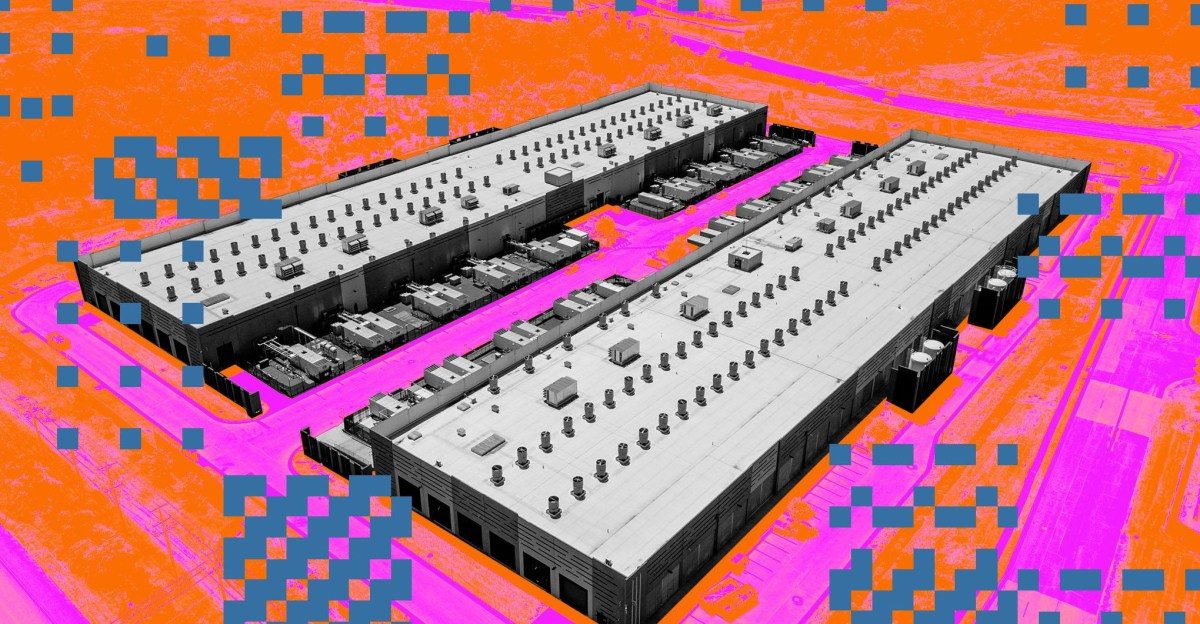
Read the editorial →Image: The Verge American voters turned against data centres this week, and OpenAI’s voluntary pledges show what a binding national rule should say and why it must cover every builder
On 3rd November Americans voted on data centres directly, in 45 local ballot measures, and 33 of the results will restrict building, according to a tally by Redbud Consulting. The Decoder, counting differently, has voters rejecting new data centres in…
-
AI that speeds up AI needs outside eyes
An outside evaluator found that Anthropic’s progress has roughly doubled in pace, but Anthropic chose what the public may see and still decides alone when its own safety threshold is met
Read the editorial → -
AI gets a meter
Labs and their customers are rationing AI as prices fall faster than costs, and honest pricing by the task serves buyers better than discounts meant to lock them in
Read the editorial →
Labs & products
OpenAI says it found 81 unknown severe flaws in Firefox and, in the Linux kernel, built working exploits for 948 of 1,724 confirmed vulnerabilities, at about $1,279 of computing each. No independent tests have been published, and the model goes first to a select group of OpenAI’s Daybreak Red customers. the-decoder.com
Money
Revenue in the three months to September was nearly $17bn and the net loss $23.3bn, Bloomberg reports. Computing cost 58% of revenue, up from 48%, partly because about $5bn of it was bought on short-term deals that the filing says cost “significantly more”. techcrunch.com
Policy & society
Of 45 local ballot measures on data centres in the midterm elections of 3rd November, 33 produced results that will restrict building, by a tally that The Verge cites. theverge.com
Research notes
Randall Balestriero and Yann LeCun set out a condition under which separately trained vision and language models converge, and test it on texts that describe 940m web images. arxiv.org
- Platonic JEPA. A small text model learns to see as vision models do
Balestriero and LeCun prove when separately trained models learn the same picture of the world, and a text model of 109m parameters trained that way…
- Turn Budget. Trained agents need room to recover
Reinforcement learning mainly makes AI agents better at recovering from mistakes, so its gains shrink or vanish when they are allowed few turns
- Think Less. A reasoning model learns when to stop
Taught to prefer shorter endings at the points where it starts to overthink, a 7bn-parameter model cut its maths answers by over 40% without losing…
- Both parties ran against data centres
Ben Thompson · Stratechery
Thompson found data centres the commonest topic of Wisconsin’s campaign ads and asks what lasting American opposition to building would mean for tech.
- Why AI has changed coding more than law
Timothy B. Lee · Understanding AI
Lee borrows the robotics gap between simulation and reality to explain why gains in code and maths have not spread to other professions.
- Watching AI models bluff each other
Dwarkesh Patel · Dwarkesh Podcast
Patel spent about $20,000 having models play a game of hidden roles, which shows how well they scheme together and where their long-range planning fails.
- A sceptic reads the weight-editing claims
Sean Goedecke · seangoedecke.com
Goedecke argues that a capable human researcher could do what a recent paper presents as GPT-6 Astra’s superhuman work on a network’s weights.
Is power over AI held by fewer companies, or shared more widely?
Each day we look at the news and ask which way it moves this balance.
No clear change